
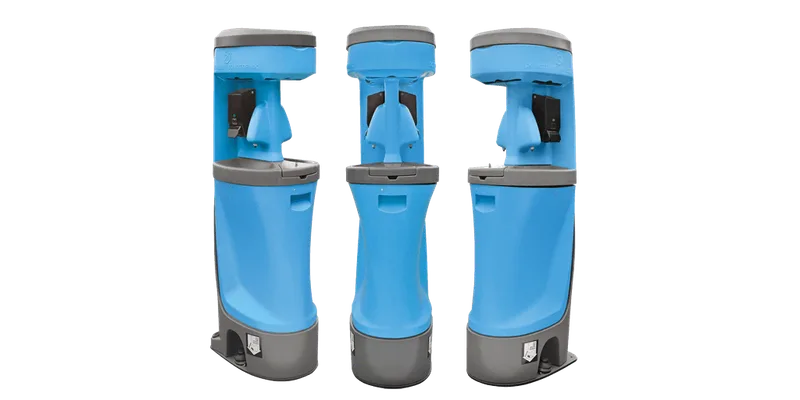
Locate the washing task
A washing station must remain useful after its initial fill. For Charlotte, choose a position that fits the users’ routine and allows the agreed water and supply service to continue while the activity is underway.
Explain whether people wash after toilet use, before eating or during work. Ask about an appropriate station and whether a separate food-operation arrangement is required. Hand sanitizer and a handwashing unit are different functions; do not substitute one without resolving the actual need.
Check who can reach and operate it
Position the station on an accepted, usable approach close to the relevant activity without blocking a toilet entrance or a queue. Discuss accessible operation and the proposed model. A convenient spot for standing adults may not serve everyone who needs to wash.
Keep a replenishment route available
Ask how clean water is supplied and how used water is contained and removed. Identify the person or provider responsible for soap and drying supplies. Do not position the unit where refill access depends on dismantling occupied tables, crossing food preparation or moving it without authorization.
Agree what happens when use exceeds the plan
Tell the provider about busy breaks and uncertain attendance. Assign someone to check supplies and report a depleted tank or fault promptly. Confirm any additional visit, replacement or change in capacity rather than improvising a drain or unapproved water connection. Include final used-water handling and collection in the quotation.
Questions before you book
Who refills the clean-water tank?
Agree that responsibility with the provider, along with the water source, used-water handling and replenishment frequency appropriate to the activity.
Can I empty used water onto the ground?
Do not improvise disposal. Follow the approved property and provider arrangement for containing and removing it.